Genre
Historical Fiction
Audience
14+
Author’s Worldview
Catholic
Year Published
2026
Themes
17th century England, Catholic recusants, 17th century maritime technology, 17th century European politics, King Charles I of England, religious freedom, privateer
Reviewed by
Courtney Guest Kim
Captain Hawke brings to life a perspective all but erased from the official historical narrative: that of a 17th century English Catholic recusant of humble birth. James Hawke starts out as an ordinary tavernkeeper in Devonshire during the reign of Charles I. That is, he is as ordinary as a tavernkeeper can be who has received a homegrown literary education and who runs a smuggling business on the side, while defying the religious mandates of a country fast devolving into a police state. Without spoilers, the main story arc involves this tavernkeeper becoming a privateer who fights for the restoration of Charles I to the throne, and, after the first King Charles is executed, for his heir, the future Charles II.
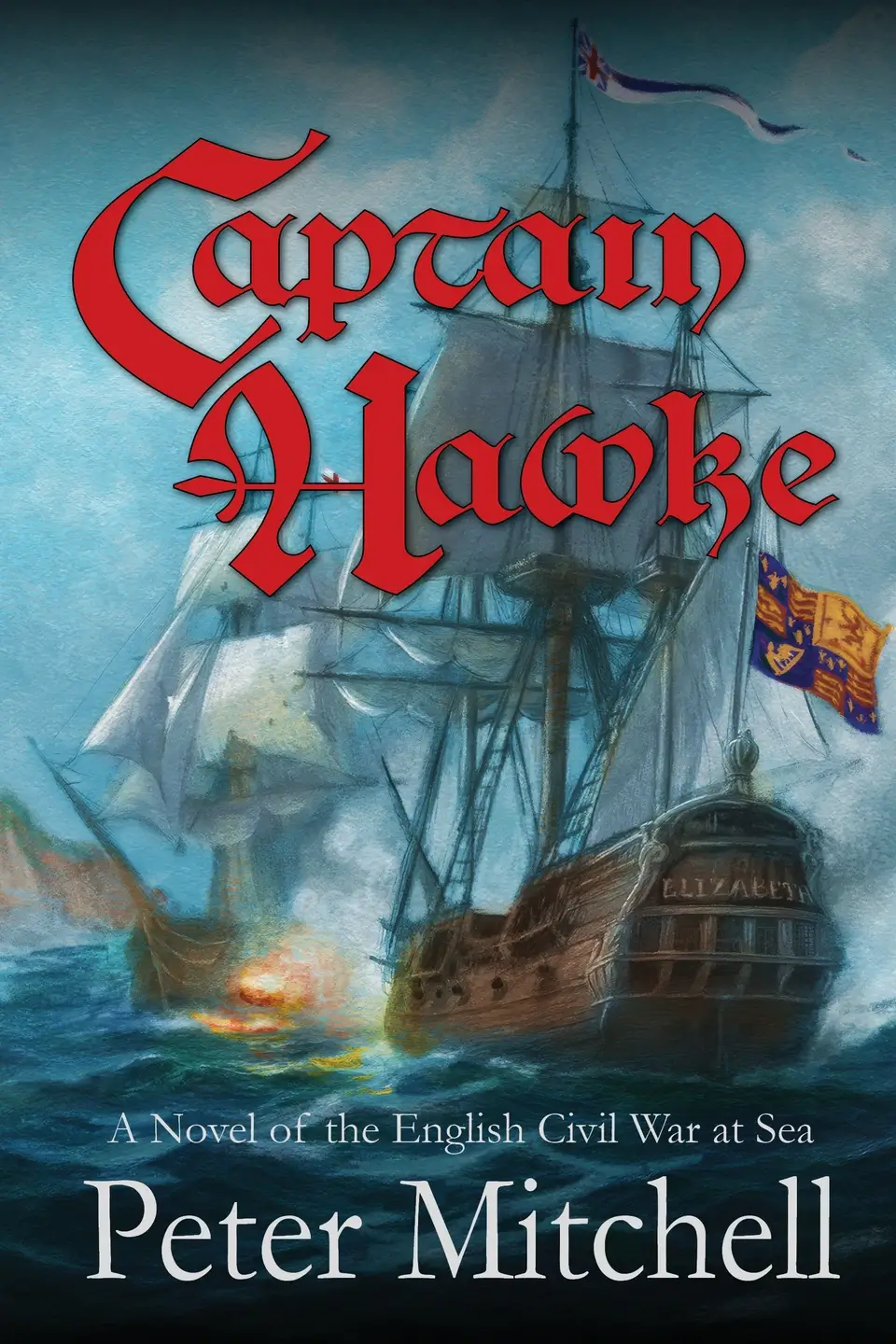
If the cover art leads you to assume that this novel will shy away from brutality, be forewarned that the inciting event is the sort of scene you would expect from an R-rated action flick. I say action flick, but I could reference Classical literature instead: the novel has a literary depth that spills out of genre boundaries. The Aeneid is mentioned within the narrative, and Captain Hawke reads like a cross between that ancient story and, say, Treasure Island. It has the sweeping narrative arc of Vergil’s tale, with a protagonist who perseveres through many revolutions of the wheel of fortune as he attempts to salvage the faith of his fathers. In addition, there are rambunctious episodes of sheer adventure punctuated by occasional lighthearted humor. There’s a plot tie-in to The Three Musketeers (set in the time period of its sequel, Twenty Years After), but unlike in Dumas’ novel, there’s no substantial female character here. That’s not to say that the women are unimportant: on the contrary, they represent everything that Hawke honors and loves. But between them, the four important female characters do not utter four pages worth of words. So, if you’re looking for romance, this is not your book. However, Captain Hawke is the first volume of a three-volume series, and I hear from the author that the next volume will offer both a feminine perspective and a romantic relationship.
If you read historical fiction to get a feel for a certain time and place, Captain Hawke exhibits a depth of knowledge of period politics, culture, and technology, especially maritime technology, that brings the 17th century to life from the perspective of working and fighting men. The narrative glitters with historical details that are seamlessly integrated into the plot. There’s no drag on the galloping forward momentum of the story from excessive explanatory disquisitions. I felt immersed in the sights, sounds, smells, tastes and feels of the grittier side of the era. The author, Peter Mitchell, does an impressive job of extracting from the mess of 17th century European politics the specific facts and forces relevant to his lowborn recusant, who is first and foremost loyal to his faith.
The story is narrated in a close third-person that maintains a disciplined alignment with the perspective of the protagonist. But at certain key moments we get brief explanations of the larger socio-political scene and summaries of important events happening elsewhere. This narrative strategy successfully avoids the problem of the fictional protagonist having to pop up improbably at every major historical event to serve as eyewitness. The historical aspect of the story is really very well done, and the explanatory asides are so brief and so strategically inserted that they come across as the sort of information and analysis that the hero himself might have had access to.
Although Hawke fights for King Charles, he never fits in with the aristocratic Cavaliers of the royal court. He does, however, form a friendship with the flamboyant Prince Rupert of the Rhine, the ultimate Cavalier. Hawke becomes a Royalist on the principle that the enemy of his enemy is his friend. And the enemy of James Hawke is the Cromwellian Puritan. The story is fascinating for its examination of the cultural dynamics that began in the 17th century but continue to play out in the English-speaking world today. However, it is free from heavy-handed commentary. The author succeeds in conveying, in a believable way, the origins of cultural contradictions within Britain and the United States that we still live with, without asphyxiating the narrative with ideology. I especially appreciated the subtle, complex depiction of the religious conflicts and paradoxes of the period. Even though James Hawke is willing to lose everything for his faith, this is not a partisan novel. The nuances of the various loyalties, enmities and strange circumstantial alliances keep the story continuously surprising and interesting, as Hawke sails from one location to another, all around the British Isles and along the coast of northwestern Europe. The book does include a map, for readers who want to see where everything is, but you don’t need the map to follow the story. Spoiler alert: this volume does not take us all the way to the Restoration in 1660, when Parliament invited Charles II back to England to ascend his father’s throne. Instead, like The Aeneid, Captain Hawke ends before the fulfillment of the hero’s mission.
James Hawke becomes an increasingly complex character over the course of the narrative. The many revolutions of the wheel of fortune take him on a deepening spiritual trajectory, and he begins to identify with Job, although he doesn’t get the ultimately happy fulfillment–yet–that even Job gets in the Bible. I would have preferred a homelier, happier ending to volume one, but the Catholic dimension of the story leans into the Dark Night of the soul and ends on a note of total renunciation. This I must admit is spiritually impeccable, if perhaps unsatisfying for the reader who is drawn mainly to the adventure. By the end of this book, it’s clear that the Church that Hawke is loyal to cannot be and will not be established in an earthly political movement. I know this to be too true, but I wanted a happy ending for a protagonist who had developed a compelling depth and complexity. I suppose I will just have to keep reading when the next books come out.
At times, Hawke’s sexual morality is too high-minded to be completely believable in a smuggler turned Royalist privateer. The narrative makes clear that the lifestyle of the Court is debauched, and that Captain Hawke refuses to participate in what are considered normal behaviors. Unless you object to the fight scenes, which range from swashbuckling to grim, there’s no reason not to hand this book to your favorite fourteen-year-old boy, as long as he can tolerate the ambiguous ending. On the other hand, the underlying tone of world-weariness, and the moments of spiritual bleakness, beautifully described and increasingly poignant as the story progresses, makes this a novel for adult sensibilities. The prose is easily readable and makes for a page-turning adventure story, but the underlying themes can be at times quite dark and bitter. Anyone who is descended from people who ventured onto small wooden boats to cross oceans in search of religious freedom should read this novel. English Catholics of course should read it, but even Americans of non-Catholic origin will get a vivid sense of why religious freedom was so important in the 17th century, worth risking your life for, and worth leaving behind everything you had ever known.