Genre
Audience
Author’s Worldview
Catholic
Year Published
2025
Themes
Crime, New Age, Hate Crime, Satanism, Journalism, Romance, Childhood Neglect, Depression, Bad Parenting, Diabetes, Genealogy/Family History, Elizabethan Persecution of Catholics, Family Saga
Reviewed by
Corinna Turner
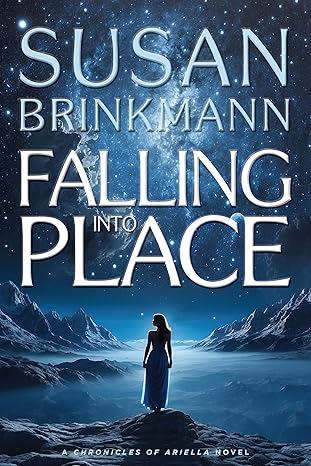
In this sequel to Lioness Lost, investigative reporter Ariella (Ari) Dalton continues to attempt to track down the Satanic gang, Hades Hood, while investigating the murder of another innocent sacristan. Working closely with handsome FBI Supervisory Special Agent Jesse Sandoval, their attraction to each other becomes even more apparent, but so do their paradoxical worldviews.
As Ari continues to publish articles on witchcraft, goddess worship, and channeling, her relationship with Jesse shows increasing strain. Will their differing views on religion push them apart?
Meanwhile, she learns about her ancestor, Ariella Rose “Rosie” Everleigh, who lived under Queen Elizabeth I during a time of serious persecution of Catholics. Will Rosie’s courage inspire Ari to reach out for help?
The second installment in this semi-educational crime/romance/family saga, Falling Into Place, held my attention almost as well as the first book and was an enjoyable read. There is development in the modern-day plotline as Ari begins to question her New Age beliefs, and her relationship with Jesse becomes more serious, but there is clearly plenty more of the story to go. The series aims to educate the reader about the dangers of the New Age movement and also provides snapshots of different periods in Catholic history.
The historical plotlines are complete and self-contained within each book. In Falling Into Place, the time and place chosen is the Elizabethan persecution in England. I was looking forward to this section, but it was actually the aspect of the book I enjoyed least. Far more obviously than in the first book, the characters suffered from the common modern tendency in historical romances to have more physical contact than is credible for the period, and to act too much like modern people, not historical ones. The Elizabethan priest, for example, actually says at one point: “Please, call me Father Ben.” This casual form of address to priests was unknown until after the Second Vatican Council in the 60s.
There were a few things in the historical section that came across as minor anachronisms, although it is worth bearing in mind that historical research is always complicated by the fact that “authoritative” history texts don’t always agree. Additionally, the author, in her own words, goes by the rule that “history should sit lightly on the page.” In this book, it may sit a little too lightly in places for some people’s taste, but readers who prefer this approach will be left with a powerful impression of the strain of living under persecution, just as the author clearly intends.
There was a moment of inconsistent characterization, when it appeared that the supposedly virtuous historical hero was being instructed to assassinate someone who knew too much by the supposedly virtuous pater familias and happily agreed to do so, which was uncomfortable, since the characters were not otherwise portrayed as being especially ‘gray.’ However, it’s a very brief moment and we’re never told whether he followed through and actually did it or not or, indeed, how he felt about the whole matter.
It will be interesting to see where the Jesse – Ari plotline goes in book 3, and what the chosen historical time period is for that segment.
As with the first book in the series, this would be a good read for secular readers who are friendly towards Catholic points of view and prepared to have their view of New Age practices challenged; as well as for Protestant readers who are open to a positive presentation of Catholicism; and also for Catholic readers who are prepared to read some New Age content with the promise of it all being (eventually) debunked. This is an enjoyable second installment in a semi-educational fiction series, offering an appealing combination of crime, romance, and history—it would, however, be best to start with book 1 in the series, Lioness Lost.