Genre
Audience
Author’s Worldview
Year Published
2024
Themes
abortion, familial breakdown, foster care, rape, women’s empowerment, planned parenthood, gamete donation, gender confusion, same-sex parenting, IVF, embryo adoption, surrogacy, birth mothers, adoptees
Reviewed by
Courtney Guest Kim
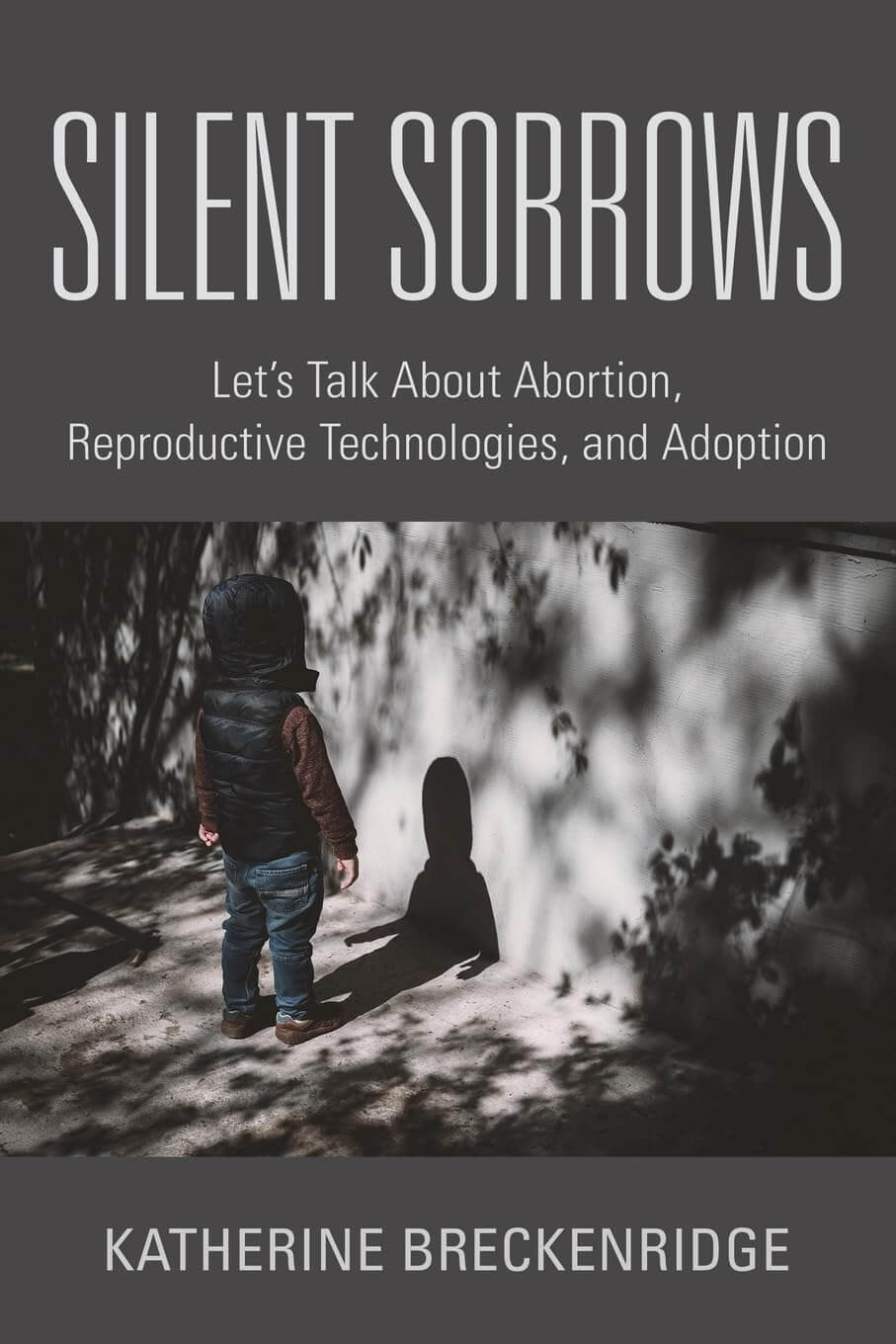
Silent Sorrows is the most compelling, most accessible discussion of reproductive hot-button topics that I have yet to come across. It is anything but a dry, abstract analysis of theological principles and scientific data, although both theology and scientific studies are thoroughly represented. There are many footnotes for readers who want to delve deeper, on a wide range of topics. But the gripping force of this book is in its innumerable personal testimonies, most of them posted on the social media of Them Before Us, the organization that Katherine Breckenridge is associated with.
Because of these personal testimonies, Silent Sorrows is an emotionally pummeling book. If you’ve been inclined to overlook “rape and incest” exclusion clauses in pro-life abortion restrictions, your views will likely shift after reading the statements from people who were conceived as a result of these crimes—and the testimonies of their mothers, who persevered through trauma and social stigma to bring to birth children who, they assert, are worth all their suffering.
However, Silent Sorrows doesn’t just present the views of the victims of IVF, surrogacy and various other forms of commodification. Katie Breckenridge does her opponents the enormous honor of quoting their arguments in their own words and responding to them in good faith, with the evident belief that they can be persuaded to revise their stance. She is writing from an Eastern Orthodox perspective, and Orthodox teaching on these topics is completely aligned with Catholic teaching. In fact, when she reaches for an official theological statement, many of her sources are Catholic.
But the Eastern Orthodox tradition has never been as enamored of philosophical structure as the Latin Church. And, these days, one of the problems for Catholics attempting to engage with a dissociative, willfully irrational culture is exactly that the Catholic way of thinking is such a vast architecture of philosophically integrated arguments. The Catholic paradigm makes sense: but how in the world do you present it to crazy people? One of the fascinating aspects of this book is seeing how the author engages with each self-referential, incoherent argument. She has the energy—I might even say the enthusiasm–of a terrier diving down a rat hole. Several times I found myself thinking that God has raised up this woman to do this work at this time. The sheer mental stress involved in responding to “Mary was a surrogate,” and “Jesus had two fathers” is more than I could endure. But she manages to do so in a theologically accurate way, in plain English, without ever stooping to the sort of derogatory dismissiveness so widespread today, but also without ever pulling any punches.
There’s no question that she intends this book to reach people who are in the process of deciding what they think about gamete donation, same-sex parenting, embryo adoption and various other practices. The fact that she so frankly critiques all forms of commodification of human beings and every disintegrating alternative to the traditional family, however, means that she’s unlikely to find readers who are not already sympathetic to the pro-life cause. Because she delves so deeply into these topics, wrestling with them not just at a moral level but at a mystical level, even a reader who already knows the facts will certainly learn something—and feel something—from reading her book. Realistically, readers for this book are going to be already pro-life but perhaps doubtful or ignorant on certain topics, wanting more information and willing to be persuaded. This would also be a useful book for people who are looking for help with how to respond to difficult questions, given how normalized practices such as IVF have become, even in Catholic social groups.
At the risk of sounding flippant, I would add that if you gravitate toward True Crime, this book will convince you that we are surrounded by true crimes being perpetrated under cover of law, with enormous financial profits flowing to the perpetrators. You won’t find a more readable, comprehensive and compelling treatment of the whole range of practices currently being encoded into conflicting new laws all around the world. But you’ll also walk away with a deeper conviction of the worth of a human life, and the importance of taking a stand. Silent Sorrows makes clear that real people are being harmed, some of them irrevocably, and that they deserve better.